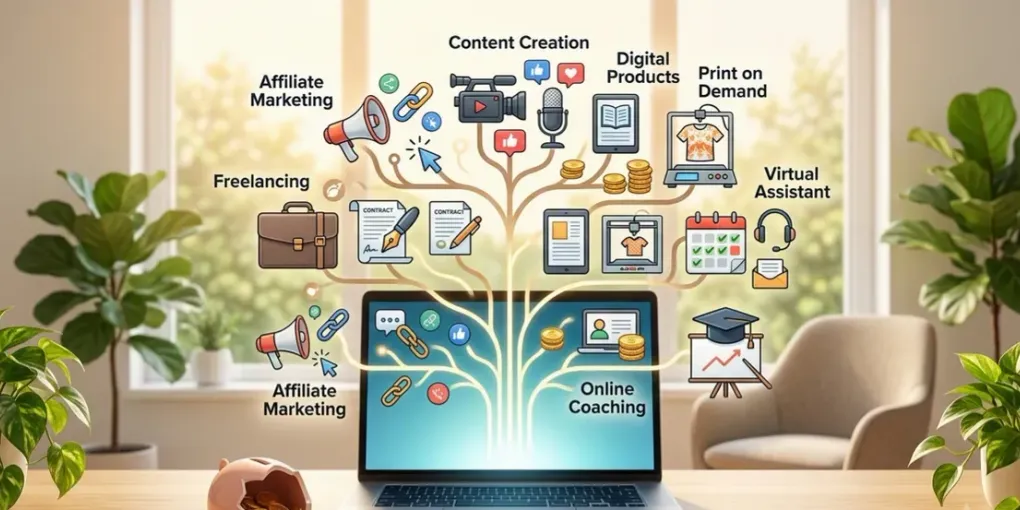
7 Proven Online Income Systems to Build a Sustainable Business in 2026
Most digital creators start with a simple goal: trade time for money by freelancing or consulting. But true financial independence comes when you stop trading hours and start building automated online income systems.
Whether you want to launch a low startup cost online business or scale your existing traffic, picking the right model is critical. In this guide, we break down the top passive revenue models for 2026—from selling digital assets to leveraging high-ticket affiliate programs—so you can build a system that works for you 24/7.
Top Online Income Systems for Content Creators
1. Selling Digital Assets (E-books, Guides & Templates)
Building an automated digital sales machine is one of the most scalable online income systems available today. Unlike traditional physical products, digital assets require zero inventory, no shipping fees, and carry near-zero marginal costs per sale.
Once you package your skills or knowledge into a downloadable asset—such as a PDF guide, a custom template, or an e-book—you can list it on creator platforms like Gumroad or Payhip and sell it infinitely to an international audience.
- Startup Cost: Extremely low (requires only your time, basic tools, and a free or low-cost storefront).
- Automated Delivery: Customers receive their download instantly upon payment via automated checkout systems like Stripe or Wise.
- Profit Margins: Typically 85% to 95%+ after platform processing fees.
Real-World Example: Want to see how a complete digital income asset is structured and monetized from scratch? Check out our step-by-step guide: Earnings Unleashed: Complete Guide for Premium Side Hustle Creators to learn how to build, launch, and monetize high-margin digital products effectively.
2. Affiliate Marketing Infrastructure
If you don’t want to create your own products right away, building an affiliate marketing infrastructure is one of the fastest ways to generate passive income. In this model, you recommend software, digital platforms, or services you already use, earning a recurring commission for every customer who signs up through your link.
Unlike one-off sales, subscription-based affiliate programs (SaaS platforms, community tools, hosting services) provide predictable monthly recurring revenue (MRR).
- Startup Cost: Zero (you leverage existing products and tools).
- Automation Level: High—once your content ranks on search engines, it generates clicks and conversions automatically.
- Best Strategy: Focus on creating high-intent content like product comparisons, in-depth reviews, and step-by-step tutorials.
Digital Products vs. Affiliate Marketing: Which System Should You Choose?
When deciding between digital product sales vs. affiliate marketing, the ideal approach isn’t choosing one over the other—it’s combining both.
For instance, you can use affiliate links inside your articles to generate immediate commissions, while directing high-intent readers to your own storefront for long-term brand equity.
If you are unsure where to host your digital storefront, choosing the right platform is critical for keeping transaction fees low and maximizing profits. For a full breakdown of platform fees, features, and digital store configurations, read our detailed comparison on Gumroad vs. Etsy vs. Payhip for Selling PDFs.
3. Subscription Communities & Paid Newsletters
Recurring revenue is the holy grail of online income systems. Instead of hunting for new buyers every month, building a paid community (using platforms like Skool) or a premium newsletter (via Substack or Beehiiv) allows you to generate predictable monthly income.
- Startup Cost: Low to medium (platform transaction fees).
- Key Strategy: Deliver ongoing value, exclusive templates, or weekly deep dives that solve specific, high-ticket problems for your members.
4. Print-on-Demand & Digital Merchandising
If you have a knack for design or simple branding, Print-on-Demand (POD) lets you sell custom apparel, mugs, and journals without holding physical stock. When a customer orders on your storefront, a third-party supplier prints and ships the item directly to them.
- Automation Level: High—integrates directly with e-commerce platforms like Shopify or WooCommerce.
- Profit Margins: 20% to 35% per sale.
5. Content Monetization (AdSense & Display Networks)
Publishing high-quality, search-engine-optimized content on your own domain (like blog.techwemate.com) creates long-term digital real estate. Once your blog attracts steady organic search traffic, you can monetize pages through ad networks like Google AdSense or Mediavine.
- Growth Horizon: Long-term investment (requires consistent publishing over 3 to 6 months).
- Advantage: Completely passive earnings based on pageviews and user engagement.
6. Online Courses & Workshop Replays
If an e-book is your entry-level product, a structured video course or recorded masterclass serves as a high-ticket asset. You record the training once, upload it to a hosted platform, and automate the enrollment process.
- Pricing Power: High ($49 to $299+ per sale).
- Best Paired With: An email autoresponder sequence that nurtures leads over 5 to 7 days.
7. Automated Lead Generation for Services
For freelancers, agencies, or consultants, your online income system doesn’t have to be purely passive—it can automate your client acquisition. By creating a free downloadable resource (a lead magnet), you capture email leads automatically and nurture them into paying clients through automated email sequences.
- Best Practice: Offer a free checklist or audit tool in exchange for an email address, then pitch your high-ticket service on autopilot.
How to Choose the Right Online Income System in 2026
When evaluating digital product sales vs. affiliate marketing or ad revenue, keep these three factors in mind:
- Time to First Sale: Selling digital downloads or affiliate products yields the fastest returns compared to ad monetization.
- Scalability: Digital products and SaaS affiliate programs scale infinitely without increasing your workload.
- Control: Owning your domain, email list, and products gives you total protection against algorithm changes.
Frequently Asked Questions (FAQ)
Can you really start an online income system for free?
Yes. Platforms like Gumroad, Payhip, and GitHub Pages allow you to host products and publish content with zero upfront investment. You only pay small processing fees when you make a sale.
How long does it take to start earning?
It depends on your traffic channels. Social media or direct outreach can generate initial sales in days, while organic search engine traffic (SEO) typically takes 60 to 90 days to compound.
Do I need a registered company (LLC) to start?
No, you can start as an individual or sole proprietor. As your automated sales increase, structuring your business into an LLC helps protect your personal assets and optimize tax reporting.
Conclusion
Building a sustainable online income system isn’t about finding a shortcut; it’s about setting up digital assets that deliver value continuously. Start with one core system—like a digital e-book or targeted affiliate content—master it, and then stack additional revenue streams on top.